

Loading the interface. JavaScript is required; controls stay disabled until ready.
Clear totals, useful details and the method behind them.
Fill in your details and select Calculate fraction. Your result will appear here.
How to use Fraction Calculator
- Enter the values labelled for this calculation and choose the relevant options.
- Select Calculate to see the primary result, supporting figures and calculation breakdown.
- Review the methodology below. Copy result keeps a plain-text summary; Reset restores the example inputs.
Formula and methodology
Addition uses (ad + cb) / bd. Division multiplies by the reciprocal. Numerator and denominator reduce by their greatest common divisor.
A worked example
1 1/2 + 1/4 = 7/4 = 1 3/4 = 1.75.
Assumptions and limitations
Integer arithmetic is exact; decimal display is approximate. Negative mixed numbers apply the sign to the entire value. Zero denominators and division by zero are rejected.
Questions and answers
Can I enter a mixed number?
Yes: use a space, for example -1 3/4 means negative seven quarters.
Add fractions using a common denominator
Fractions keep a ratio as integers rather than immediately rounding it to a decimal. This is helpful when adding, multiplying or dividing quantities that need an exact form. The numerator and denominator have distinct roles, and a denominator cannot be zero.
A practical example
One-half plus one-third equals three-sixths plus two-sixths, or five-sixths. A mixed number such as 1 1/2 represents three-halves. Simplification divides numerator and denominator by their greatest common divisor without changing the represented value.
Multiply by a reciprocal when dividing
Dividing two-thirds by one-quarter means multiplying two-thirds by four, giving eight-thirds or 2 2/3. Dividing by a zero fraction is undefined and rejected. Negative mixed numbers apply their sign to the whole value, so inspect the sign before comparing an exact result with a decimal approximation.
Keep exact and approximate output distinct
The integer fraction arithmetic is exact within supported input bounds, while the displayed decimal can be approximate for repeating expansions. Do not replace an exact ratio with a short rounded decimal when subsequent work depends on exactness. Use a percentage conversion only when a share of 100 is the intended interpretation.
Worked example: scaling a recipe
A recipe asks for 3/4 cup of flour and you want one and a half batches. Multiply 3/4 by 3/2: the numerators give 9 and the denominators give 8, so you need 9/8 cups, which is 1 1/8 cups as a mixed number. If you also add 2/3 cup from a second recipe, the lowest common denominator of 8 and 3 is 24, so 27/24 + 16/24 = 43/24, or 1 19/24 cups.
More questions about the Fraction Calculator
How do you simplify a fraction?
Divide the numerator and denominator by their greatest common divisor. For 18/24, the largest number that divides both is 6, so the fraction becomes 3/4. If the greatest common divisor is 1, the fraction is already in its simplest form. Simplifying never changes the value, only how it is written.
How do I convert a mixed number to an improper fraction?
Multiply the whole number by the denominator, add the numerator and keep the same denominator. For 2 3/5, that is 2 times 5 plus 3, giving 13/5. To go back, divide 13 by 5: the quotient 2 is the whole number and the remainder 3 sits over the original denominator.
How do you divide one fraction by another?
Flip the second fraction and multiply. To work out 3/4 divided by 2/5, turn 2/5 into 5/2 and multiply: 3 times 5 is 15 and 4 times 2 is 8, so the answer is 15/8, or 1 7/8. This is often taught in the UK and Australia as keep, change, flip.
Choose your next task
- Percentage calculator: Express a part-to-whole relationship as a percentage.
- Scientific calculator: Evaluate an expression when an approximate numerical result is suitable.
Learn how to use this tool

How to Use a Scientific Calculator Online: Complete Beginner's Guide
A beginner-friendly walkthrough of scientific calculator functions, common mistakes and practical examples for everyday learning.
About 7 min read
Read guide
How to Calculate Sin, Cos, and Tan Using a Scientific Calculator
Understand trigonometric ratios, choose the right angle mode and solve practical triangle problems with step-by-step examples.
About 6 min read
Read guide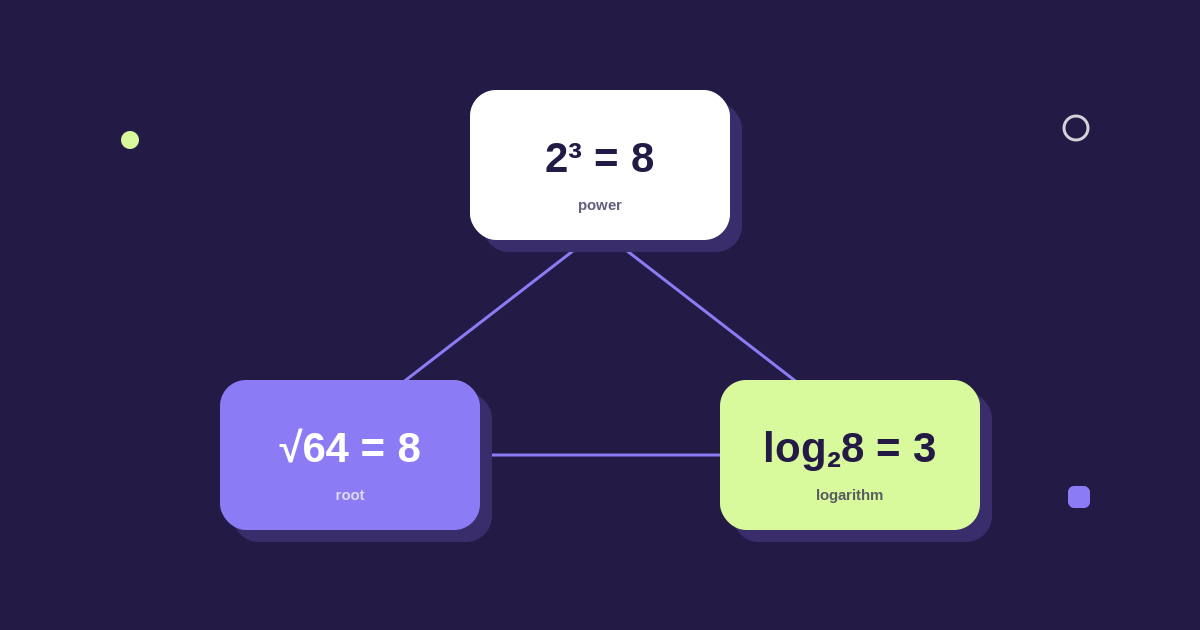
How to Calculate Logarithms, Powers, and Square Roots Online
Explore powers, roots and logarithms with clear examples, calculator instructions and the mathematical rules connecting them.
About 7 min read
Read guide