

Loading the interface. JavaScript is required; controls stay disabled until ready.
What would you like to calculate?
Choose a question below, fill in the two numbers, and select Calculate.
Calculations stay in your browser. Results are rounded for display; the formula and assumptions are explained below.
How to use Percentage Calculator
- Enter the values labelled for this calculation and choose the relevant options.
- Select Calculate to see the primary result, supporting figures and calculation breakdown.
- Review the methodology below. Copy result keeps a plain-text summary; Reset restores the example inputs.
Formula and methodology
Percentage of = A × B / 100. Change = (new - original) / |original| × 100. Symmetric difference uses the mean of two non-negative values.
A worked example
20% of 150 is 30. Increasing 150 by 20% gives 180; 30 is 20% of 150.
Assumptions and limitations
Select a mode: the field labels change to match the formula. A zero original value cannot define a relative change.
Questions and answers
How does difference differ from change?
Change has an original reference; symmetric difference has no preferred reference and divides by the average.
Choose an amount or a rate
Percentage problems can look alike while asking for different quantities. Identify whether you need an amount, a rate, a changed value or a comparison before selecting a mode. The denominator is what gives a percentage its meaning.
A practical example
Twenty percent of 150 is 30. Asking what percentage 30 is of 150 gives 20%. The same numbers appear, but the unknown quantity changes. Enter the part and whole in the fields identified by the selected mode rather than assuming the first value is always the percentage.
Difference is not the same as change
A relative change has an original reference value. A symmetric difference between non-negative values uses their mean instead. For 80 and 100, change from 80 is 25%, while symmetric difference is about 22.22%. These are not conflicting answers; they describe different comparisons.
Use a dedicated tool when the task is specific
For a sale price, discounts and coupons need their own order and rounding assumptions. For an old-to-new measurement, use Percentage Change to keep the baseline explicit. A zero original value cannot define an ordinary finite relative change. Read the formula and selected mode before copying a result into a report.
Worked example: three everyday percentage questions
What is 15% of 80? Multiply 80 by 0.15 to get 12. What percent of 250 is 40? Divide 40 by 250 to get 0.16, which is 16%. And 30 is 20% of what number? Divide 30 by 0.20 to get 150. These three forms cover most real questions, from a restaurant tip to a test score to working back to an original price.
More questions about the Percentage Calculator
How do I calculate a percentage of a number in my head?
Find 10% by moving the decimal point one place left, then scale it. 10% of 340 is 34, so 5% is 17 and 15% is 51. For 1%, move the decimal two places. Building other percentages from 10% and 1% is how most people check tips, discounts and VAT without a calculator.
Is a percentage increase followed by the same decrease back to the start?
No. If a price of 100 rises by 20% it becomes 120. A 20% fall from 120 takes off 24, leaving 96. The second percentage is applied to a larger base, so the drop is bigger. To undo a 20% increase, you need a decrease of about 16.7%.
What is the difference between percent and percentage points?
Percentage points measure the gap between two percentages, while percent measures relative change. If a mortgage rate goes from 4% to 5%, it rose by one percentage point, but that is a 25% increase in the rate itself. News reports on interest rates and election polls should use percentage points.
Choose your next task
- Percentage change calculator: Measure an increase or decrease from a chosen original value.
- GPA calculator: Weight credits and preserve institution-specific grading limitations.
- Profit margin calculator: Differentiate margin from markup and gross profit from retained income.
- Discount calculator: Apply sale reductions with optional stacked discounts.
- Fraction calculator: Keep a part-to-whole relationship as an exact fraction.
Learn how to use this tool
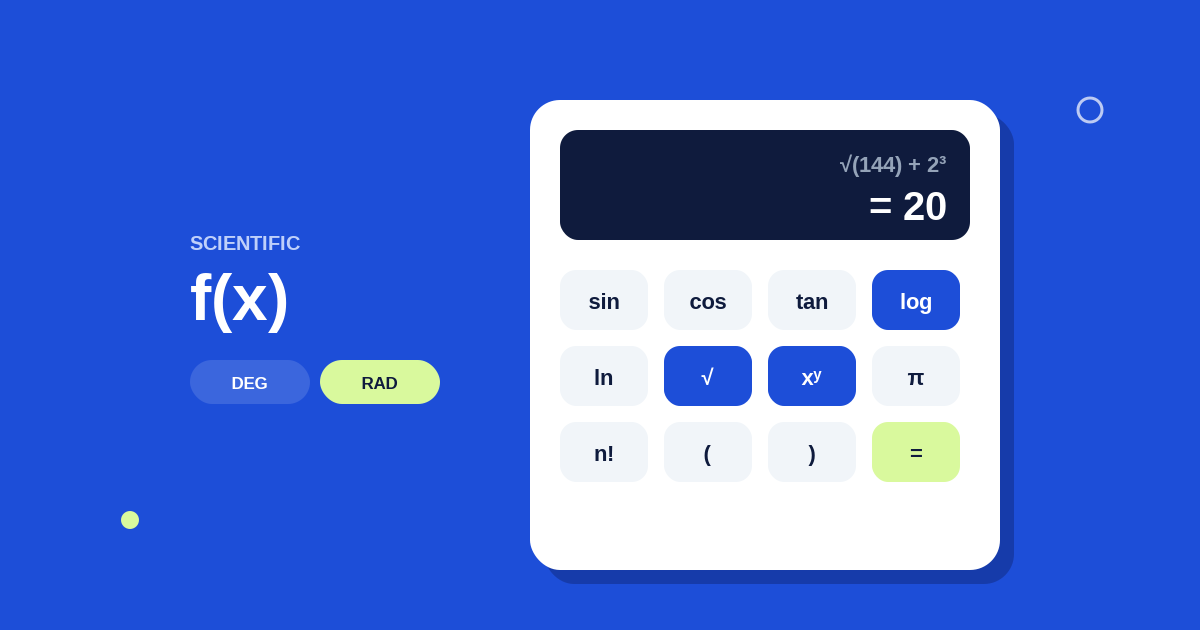
How to Use a Scientific Calculator Online: Complete Beginner's Guide
A beginner-friendly walkthrough of scientific calculator functions, common mistakes and practical examples for everyday learning.
About 7 min read
Read guide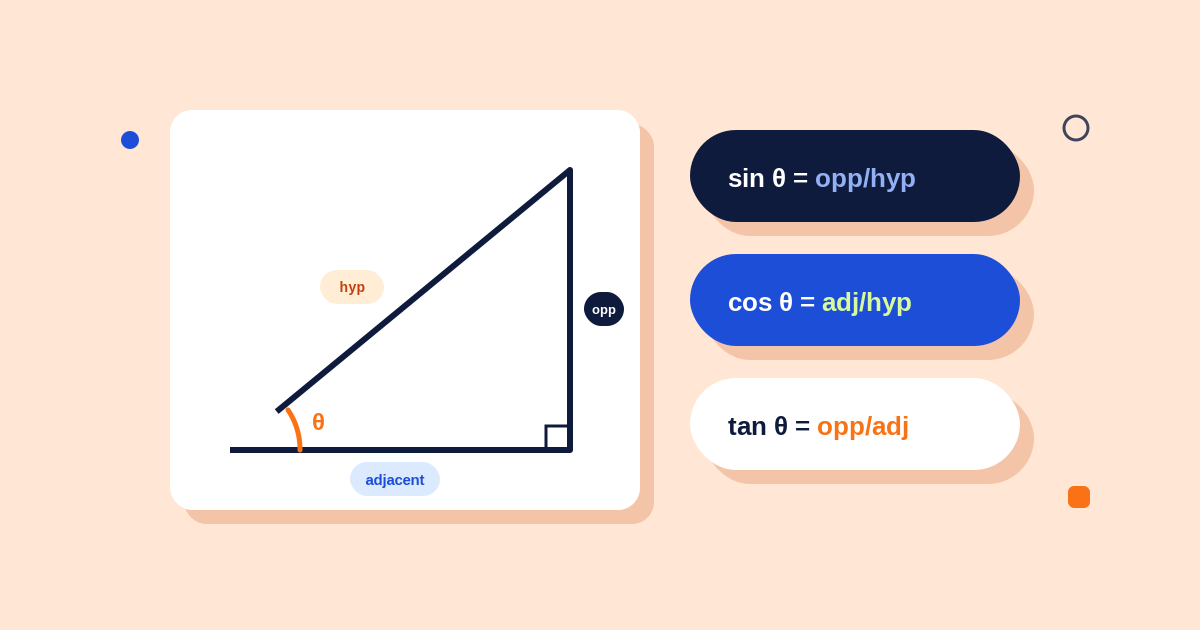
How to Calculate Sin, Cos, and Tan Using a Scientific Calculator
Understand trigonometric ratios, choose the right angle mode and solve practical triangle problems with step-by-step examples.
About 6 min read
Read guide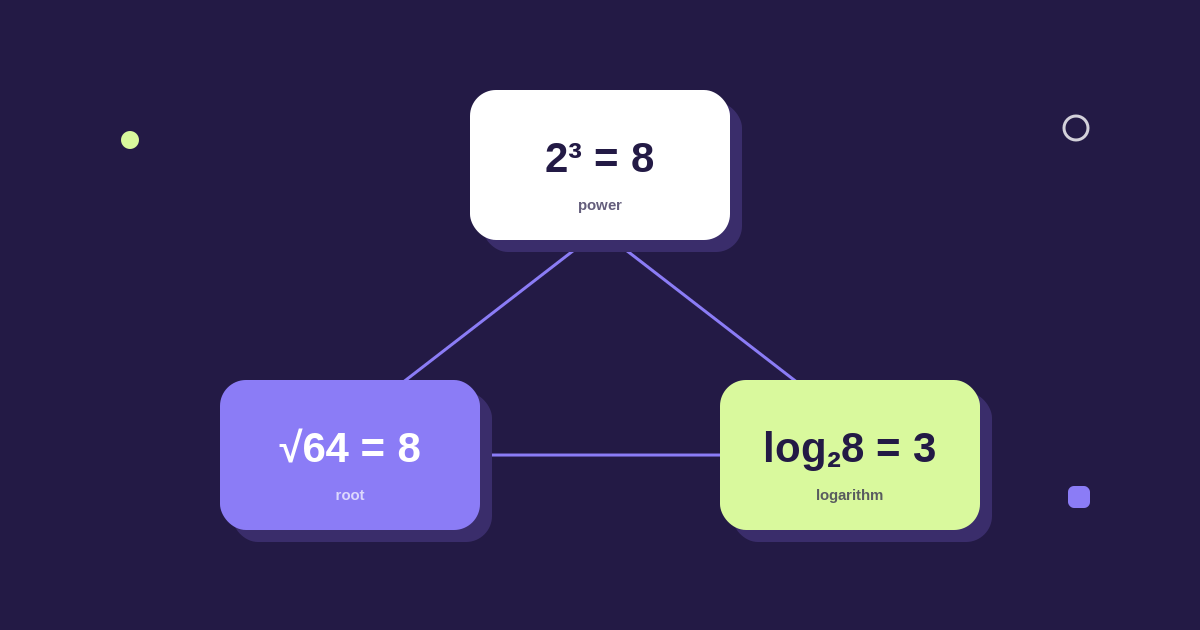
How to Calculate Logarithms, Powers, and Square Roots Online
Explore powers, roots and logarithms with clear examples, calculator instructions and the mathematical rules connecting them.
About 7 min read
Read guide